
Why Opening a Savings Account for Your Child Can Be a Smart Financial Move
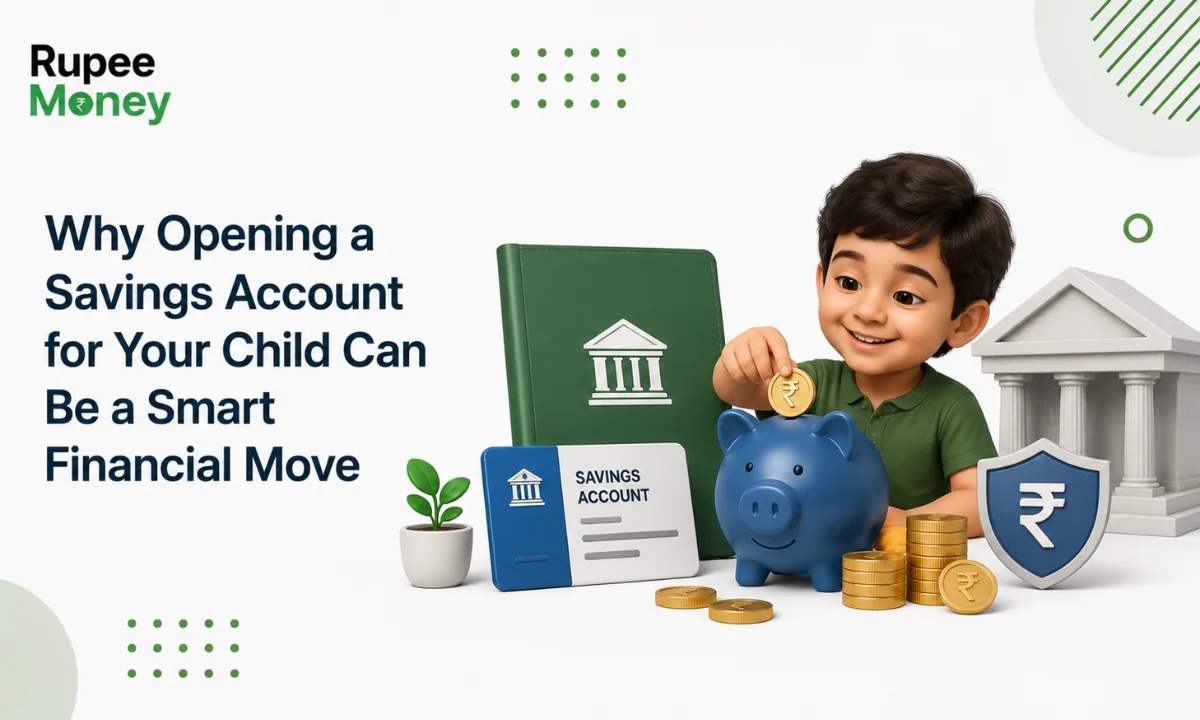
Many parents start saving for their child’s future almost from the day they’re born. Whether it’s for education, emergencies, or long-term goals, building a financial cushion early can make a genuinely meaningful difference down the road — the kind of habit that carries straight into building wealth in your 20s and beyond. While piggy banks and cash saved at home are common, opening a savings account in your child’s name is often a smarter way to build financial discipline from an early age.
Today, most banks in India offer minor savings accounts with features designed specifically for children. These accounts don’t just help parents save systematically — they also introduce kids to real banking concepts like deposits, interest, digital banking, and responsible money management.
This article covers the key benefits of opening a savings account in your child’s name, how these accounts actually work under RBI’s current rules, eligibility, and what parents should weigh before choosing one.
What Is a Minor Savings Account?
A minor savings account is a bank account opened in the name of a child below 18 years of age. Under RBI’s rules, banks must let a guardian open and operate the account on behalf of a minor of any age — including infants — with the guardian’s role now explicitly recognised for mothers as well as fathers, following a major RBI circular that consolidated these rules in April 2025.
Older children get more independence. Once a child turns 10, banks may allow them to open and operate the account on their own, subject to transaction and amount limits that each bank sets under its own risk policy. Most banks offer features designed to encourage regular saving while still keeping some level of parental oversight in place.
Why Consider Opening a Savings Account in Your Child’s Name?
A savings account is more than just a place to park money. It helps children genuinely understand financial responsibility, while giving parents a structured way to save toward future needs. Here’s why so many parents choose this route.
1. It Helps Build the Habit of Saving Early
Financial habits are largely formed in childhood. When kids receive pocket money, birthday gifts, or festival cash, depositing a portion into their own account teaches them early that saving matters just as much as spending. Over time, that habit tends to carry into better financial decision-making as adults.
2. It Encourages Financial Literacy
A minor savings account introduces children to real banking concepts — deposits, interest earnings, ATM cards where permitted, passbooks, and online banking under parental supervision. As they grow older, this hands-on exposure tends to make them noticeably more confident managing their own money.
3. It Keeps Savings Separate from Household Expenses
A dedicated account in your child’s name makes it much easier to ring-fence money for their future — school fees, higher education, skill development courses, emergency needs, or future big purchases. That separation also makes it far easier to actually track progress toward long-term goals rather than losing it in general household spending.
4. It Lets Their Savings Actually Earn Interest
Money sitting in a savings account earns interest at the bank’s applicable rate. While rates vary between banks and shift over time, keeping money in an account generally lets it grow rather than sitting idle at home. Some banks also offer special features or more attractive rates specifically for children’s accounts, subject to their own terms.
5. It Introduces Responsible Banking Habits Early
Many banks now offer age-appropriate features for children, including debit cards with transaction limits, mobile banking with parental controls, spending caps, SMS alerts, and online account monitoring. These let children practice responsible banking while parents still retain meaningful oversight.
Who Can Open a Minor Savings Account?
Under the RBI’s current framework, minors of any age can open a savings or term deposit account through a natural or legal guardian, including the child’s mother — a point RBI specifically clarified to remove earlier ambiguity around maternal guardianship. Once a child crosses 10 years of age, banks may allow them to open and operate the account independently, within limits the bank itself defines. KYC documents for both the guardian and the child are generally required regardless of the child’s age.
Documents Required
Banks commonly ask for the child’s Aadhaar Card if available (or a Baal Aadhaar Card for younger children who don’t yet have one), a birth certificate, the parent’s or guardian’s Aadhaar Card, PAN Card where applicable, address proof, and passport-size photographs. Exact requirements can vary slightly from bank to bank.
How to Choose the Right Savings Account for Your Child
Before opening an account, it’s worth comparing a few things directly. Check the interest rate the bank offers on its minor savings accounts. Look at the minimum balance requirement — some accounts demand one, others don’t. Review the digital banking features, particularly how strong the parental controls actually are. Understand the debit card facility, including what spending limits apply if your child is old enough to get one. And check the charges tied to ATM usage, account maintenance, and other banking services, since these can quietly add up.
Things Parents Should Keep in Mind
Opening a child’s savings account is genuinely useful, but it works best alongside a few habits on the parents’ side too: teaching kids about responsible spending, monitoring account activity regularly, never sharing banking passwords, and educating children about online fraud and phishing scams as they start using digital banking themselves — a real concern given how AI-powered financial fraud is rising across banking generally. Encouraging saving over unnecessary spending rounds out the picture. Developing these habits early tends to pay off well into adulthood.
Latest Trends in Children’s Savings Accounts
Many Indian banks now offer digital-first savings accounts for children, with mobile banking access, educational tools, spending controls, and personalised debit cards. Financial literacy has become a real focus area too, with banks rolling out interactive learning resources to help kids understand money management from a young age.
The bigger shift, though, came from the RBI itself. Its April 2025 circular consolidated years of scattered guidance into one unified framework, explicitly recognising mothers as guardians and setting 10 as the age threshold banks can use for independent account operation — with banks required to align their policies with the new rules by July 1, 2025. If you’re opening an account now, it’s worth confirming your bank has fully implemented these updated norms, since practices can still vary slightly between institutions during the transition. As your child’s savings mature, it’s also worth thinking ahead to how those funds might eventually be diversified — comparing options like FD vs SIP, understanding what an SIP actually is, or even Gold vs Fixed Deposit once there’s a meaningful balance to work with.
Key Takeaways
- A minor savings account helps children build disciplined saving habits from an early age.
- Under RBI’s April 2025 rules, minors of any age can have an account opened through a guardian, including their mother.
- Children aged 10 and above may operate their account independently, within bank-defined limits.
- Minor savings accounts earn interest, helping money grow instead of sitting idle.
- Compare interest rates, charges, and parental control features before choosing a bank.
Frequently Asked Questions (FAQs)
Can a child have a savings account in India?
Yes. Under RBI’s current rules, minors of any age can have a savings account opened through a guardian, and children aged 10 and above may be allowed to operate it independently, subject to the bank’s own limits.
Who operates a minor savings account?
For younger children, a parent or legal guardian operates the account — and RBI now explicitly recognises mothers in this role. Children aged 10 and above may operate the account themselves, within bank-set limits.
Does a child’s savings account earn interest?
Yes, at the bank’s applicable savings account rate, which varies by institution and can change over time.
Can a child get a debit card?
Many banks issue debit cards to eligible minor account holders, typically with transaction limits and parental controls attached.
Is a minor savings account useful?
Yes — it helps children learn financial discipline early while giving parents a structured, trackable way to save for future goals.
Conclusion
Opening a savings account in your child’s name is about far more than earning a bit of interest — it’s a genuine opportunity to introduce them to financial habits that can last a lifetime. From understanding the value of saving to seeing how banks actually work, a minor savings account offers practical financial education alongside disciplined saving.
Before choosing one, compare interest rates, digital features, minimum balance requirements, and parental controls across a few banks — and make sure the bank you pick has fully adopted RBI’s updated 2025 framework. The right account can genuinely support your child’s financial journey while giving you real peace of mind as a parent.
Disclaimer – This article is for informational and educational purposes only and should not be considered financial or banking advice. Features, eligibility criteria, interest rates, charges, and operating rules for minor savings accounts vary across banks and may change over time. Please refer to your bank’s latest terms and conditions before opening an account.
ABOUT THE AUTHOR

