
How Does IRCTC Make Money? Revenue Sources and Business Model Explained
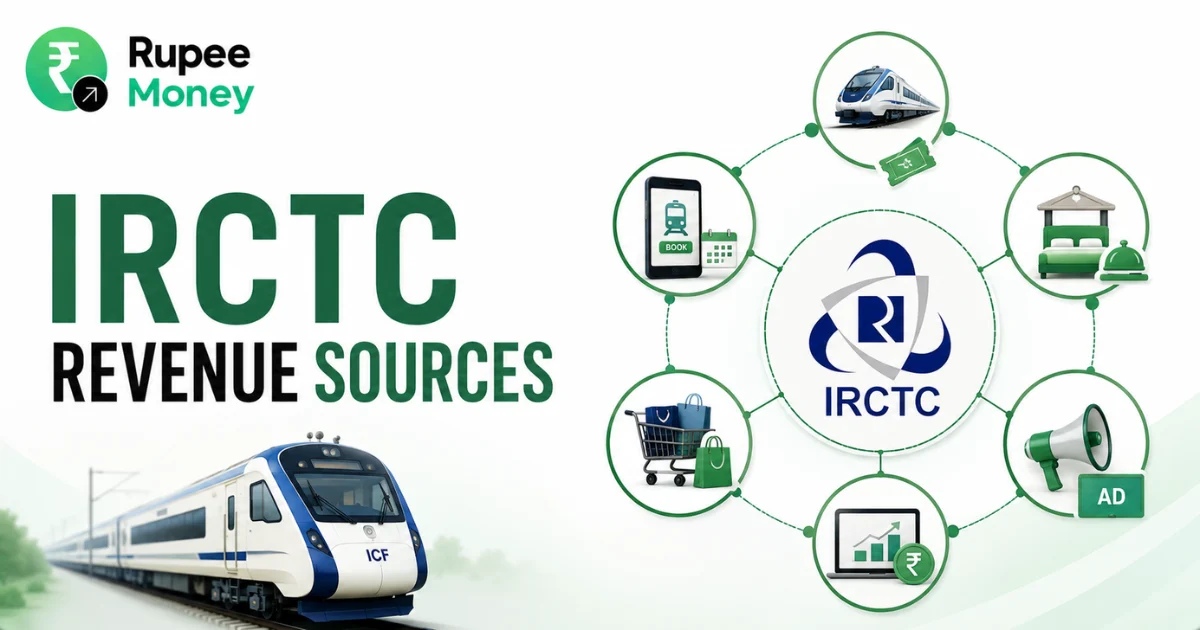
Every time you book a train ticket, IRCTC earns revenue. Ordering food on a train generates income for them. Buying a Rail Neer bottle adds to their profits.
Ticket bookings form just one part of this massive business. Indian Railway Catering and Tourism Corporation manages four major segments. These include catering, internet ticketing, Rail Neer, and tourism.
Their business model merges digital services with massive railway operations. This gives IRCTC a dominant position in India’s travel network.
During FY2026, the company reported ₹5,214.86 crore in operating revenue. This showed an impressive 11.5% growth compared to FY2025. The company also posted a ₹1,393.37 crore net profit.
At RupeeMoney. We simplify complex stock market business models for you. Let us explore exactly how IRCTC makes its money today.
What Does IRCTC Do?
The government established IRCTC in 1999. It operates as a powerful public-sector enterprise. The Ministry of Railways controls this massive corporate entity.
Its actual role extends far beyond booking train tickets online. The company dominates four distinct business verticals today. They run catering, internet ticketing, Rail Neer, and tourism operations.
Every segment follows a completely different revenue model. Some divisions generate massive top-line revenue for the company. Other divisions deliver much higher profit margins.
This unique dynamic makes IRCTC fascinating for long-term investors. To understand market price movements, read What Makes the Stock Market Go Up or Down?.
IRCTC Business Model and FY2026 Revenue Breakdown
IRCTC earns money through four main operational segments. The FY2026 segment revenue highlights the scale of each division.
| IRCTC Business Segment | FY2026 Revenue |
| Catering | ₹2,398.75 crore |
| Internet Ticketing | ₹1,535.51 crore |
| Tourism | ₹890.08 crore |
| Rail Neer | ₹407.51 crore |
These audited FY2026 figures highlight the exact revenue distribution. Catering brought in the highest overall revenue this year. Internet ticketing maintained its status as the most profitable segment.
Tourism and Rail Neer provided excellent supplementary revenue streams. Let us analyze each business segment in detail below.
1. How IRCTC Makes Money From Catering
Catering represents the largest revenue engine for IRCTC. The company generated ₹2,398.75 crore from catering in FY2026. This includes food and hospitality services across the railway network.
IRCTC earns money through multiple catering channels.
Onboard Train Catering
Passengers buy meals and beverages during their train journeys. IRCTC directly manages catering across premium train services. The company also hires authorized food contractors and vendors.
Revenue flows from direct food sales and vendor contracts. Indian Railways provides a massive, captive customer base daily. Millions of passengers travel across the country every single day. Small purchases from individual passengers create massive total revenue.
Railway Station Catering
IRCTC manages physical catering facilities at railway stations nationwide. They operate modern food plazas and convenient Jan Ahaar outlets.
Passengers purchase fresh meals and snacks while waiting for trains. IRCTC earns steady revenue through these busy station operations.
E-Catering Services
IRCTC runs a highly successful digital e-catering platform. Passengers order favorite meals from popular partner restaurants online. Delivery executives bring the fresh food directly to passenger seats.
This modern model offers better food choices during journeys. IRCTC earns high commissions from these restaurant partners. This asset-light model saves IRCTC from cooking every meal internally.
2. How IRCTC Earns From Online Ticket Booking
Online ticketing remains a highly profitable business for IRCTC. The company generated ₹1,535.51 crore from internet ticketing in FY2026.
IRCTC runs the primary platform for railway ticket reservations. This digital business operates differently from traditional retail operations. IRCTC does not manufacture any physical product for online bookings.
Instead, it maintains the digital infrastructure enabling railway reservations.
Convenience Fees Drive Ticketing Revenue
IRCTC earns massive revenue through ticketing convenience fees. Passengers pay a small service charge while booking tickets online.
Authorized travel agents also utilize the IRCTC ticketing infrastructure. The company earns steady commission fees through these agent channels. Millions of daily digital transactions generate massive consistent revenue.
Digital ticketing requires zero physical inventory or storage space. This low-cost structure makes the ticketing segment incredibly profitable.
If you want to invest systematically in strong companies, use our SIP Calculator.
3. How IRCTC Makes Money From Rail Neer
Rail Neer operates as IRCTC’s exclusive packaged drinking water brand. The company manufactures and distributes safe drinking water nationwide.
IRCTC generated ₹407.51 crore from Rail Neer during FY2026. Passengers buy Rail Neer across railway stations and inside trains. The business leverages India’s massive railway passenger network perfectly.
Rail Neer Revenue Generation
IRCTC earns money directly by selling Rail Neer bottles. The company operates multiple water production facilities across India. They distribute these packaged bottles across thousands of railway stations.
This particular business depends entirely on high sales volume. Railway passengers represent an enormous and guaranteed customer base.
Rail Neer perfectly complements the other railway-focused business segments. It gives IRCTC a physical consumer product alongside digital services.
4. How IRCTC Makes Money From Tourism
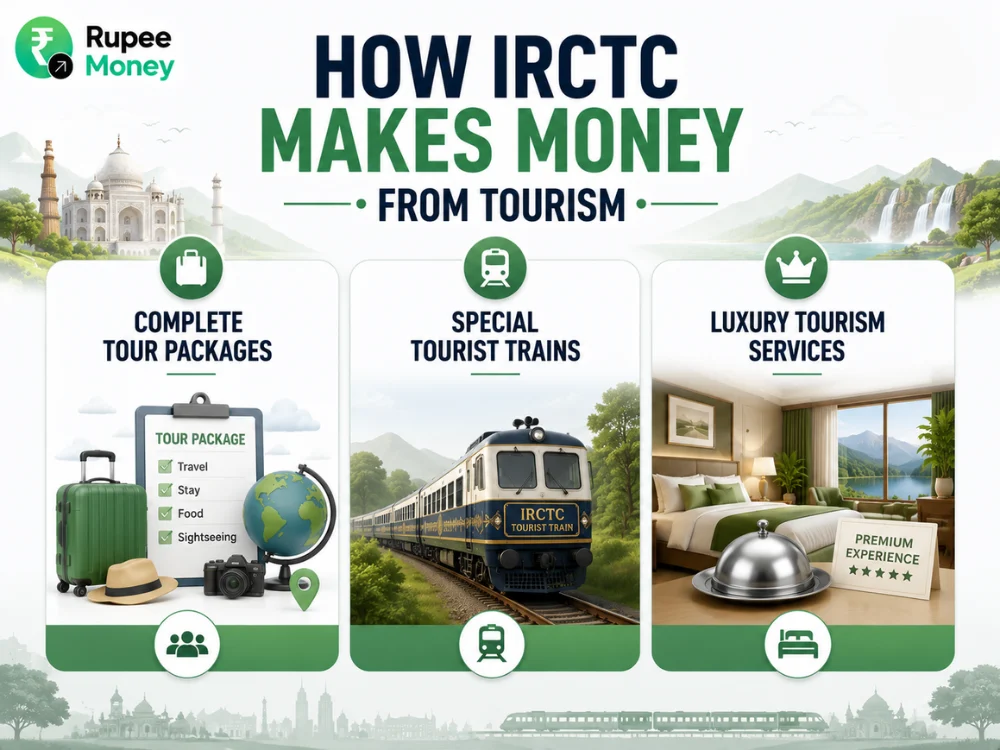
Tourism provides IRCTC with a rapidly growing revenue stream. The company generated ₹890.08 crore from tourism in FY2026.
IRCTC designs and sells diverse travel and tourism packages. These include hotel bookings, flight tickets, and train-based tourism.
Complete Tour Packages
IRCTC sells exciting domestic and international tourism packages. These comprehensive packages include transport, comfortable accommodation, and sightseeing. The company earns direct revenue when customers buy these holidays.
Special Tourist Trains
IRCTC operates dedicated tourism trains across the country. These include spiritual journeys and historical tourist circuits. The Bharat Gaurav trains have boosted railway-based tourism significantly.
These special packages generate high revenue from tickets and accommodation.
Luxury Tourism Services
IRCTC manages premium luxury trains like the Maharajas’ Express. These exclusive experiences attract high-net-worth individuals and foreign tourists. Luxury services generate significantly higher revenue per customer.
Why Is IRCTC’s Ticketing Business So Profitable?
Revenue numbers alone do not reveal the complete financial picture. Different IRCTC segments carry different operating costs and profit margins.
Catering generates much more gross revenue than internet ticketing. However, catering requires expensive food, labor, kitchens, and logistics.
Internet ticketing processes digital transactions with minimal physical costs. This creates a massive difference in segment profitability. Internet ticketing contributes the largest share of operating profits.
Investors heavily value the high-margin nature of the ticketing business. You can evaluate corporate valuations by reading How Is Market Capitalization Calculated?.
The Unique Railway Ecosystem Advantage
IRCTC enjoys a massive structural advantage over private competitors. The railway network grants exclusive access to millions of customers.
Passengers must use the railway infrastructure for train travel. IRCTC effortlessly offers supplementary services around this core journey. They offer online tickets, fresh food, water, and tourism packages.
This creates multiple revenue streams from a single traveling customer. One passenger might book a ticket and order an e-catering meal. They will likely buy a Rail Neer bottle too.
This integrated ecosystem builds a highly diversified business model.
Analyzing IRCTC FY2026 Revenue and Profit
The latest full-year numbers highlight a growing, profitable enterprise. IRCTC reported ₹5,214.86 crore in operating revenue for FY2026.
The total standalone income reached an impressive ₹5,474.97 crore. Profit before tax touched ₹1,875.08 crore for the year. Profit after tax stood at ₹1,393.37 crore.
Operating revenue grew slightly faster than net profit this year. Higher revenue does not automatically guarantee equal profit growth. Investors must track both revenue growth and profit margins closely.
Check out our Lumpsum Calculator to project potential stock returns over time.
Is IRCTC a True Monopoly Business?
IRCTC holds a unique monopoly in online railway ticketing. This exclusive status gives the company a massive competitive advantage.
However, investors must never treat monopolies as risk-free investments. Government policies and railway regulations can change without warning. Private competition exists in tourism and food delivery segments.
A smart investor studies financial performance and regulatory risks continuously. To understand public listings, read What Is an IPO?.
Risks in the IRCTC Business Model
IRCTC possesses strong advantages, but significant risks remain present. The company operates inside a highly regulated government environment.
Sudden railway policy changes can disrupt its revenue structure immediately. Changes in ticketing convenience fees impact profit margins instantly.
Catering operations carry persistent hygiene and labor management risks. Tourism revenue depends entirely on discretionary consumer travel spending. Investors must monitor these risks before buying IRCTC shares.
Compare stock market investments with safe options using our FD Calculator.
How Investors Should Evaluate IRCTC
Smart investors look far beyond the daily share price. You must examine steady revenue growth and net profit growth.
Evaluate the performance of each individual business segment carefully. Track operating margins, free cash flows, and regular dividend payments.
Read What Is Dividend & How It Works in India? to understand corporate payouts.
Look at where the stock trades by reading about NSE vs BSE.
Always compare the company’s profitability against its current valuation. Even excellent monopolies become poor investments at excessive valuations.
Start your investing journey early by reading Building Wealth in Your 20s.
Conclusion
IRCTC generates wealth through much more than ticket bookings. Catering, internet ticketing, tourism, and Rail Neer drive its growth.
Catering brought in the highest top-line revenue during FY2026. Internet ticketing remains the true profit engine for the company. The massive Indian Railways ecosystem provides a guaranteed customer base.
The key question for investors is evaluating future segment growth. Analyze how management navigates regulatory challenges and expands digital services.
Frequently Asked Questions:
How does IRCTC make money?
IRCTC makes money through four major business segments today. These segments include catering, internet ticketing, Rail Neer, and tourism. They generate revenue from onboard food, booking fees, packaged water, and travel packages.
What is the biggest source of revenue for IRCTC?
Catering currently serves as IRCTC’s largest revenue segment. It generated ₹2,398.75 crore during FY2026. However, internet ticketing generally produces much stronger profit margins due to low digital operating costs.
Does IRCTC make money from train ticket bookings?
Yes, IRCTC earns massive revenue from its internet ticketing business. Passengers pay service charges when booking eligible railway tickets online. IRCTC generated ₹1,535.51 crore from internet ticketing during FY2026.
Does IRCTC earn money from Rail Neer?
Yes, Rail Neer is a vital IRCTC revenue source. IRCTC manufactures and sells packaged drinking water across railway stations. The company generated ₹407.51 crore from Rail Neer during FY2026.
Why is IRCTC’s ticketing business so profitable?
IRCTC’s ticketing business benefits from massive transaction scale. Digital infrastructure processes millions of bookings with minimal physical costs. This digital nature creates much stronger profit margins than physical catering operations.
Disclaimer: This article provides general educational information about IRCTC and its business model. It does not constitute investment, financial, tax, or legal advice. Company financial results and business conditions change constantly. Always evaluate valuation, financial performance, and personal investment goals before investing. Consult a registered financial advisor if needed.
ABOUT THE AUTHOR

