
Credit Score Reset in India: 5 Steps to Fix CIBIL Errors
A small error in your credit report creates huge problems. You might face loan rejections during emergencies. An unknown loan or wrong EMI status hurts your creditworthiness. You need a credit score reset immediately.
Welcome to RupeeMoney. We help you fix credit report errors easily. You do not erase your entire credit history. Instead, you find and correct wrong information.
Lenders and borrowers discuss credit score resets frequently today. The Reserve Bank of India updated credit rules recently. Credit institutions update records fortnightly since January 2025. This fast update cycle helps Indian borrowers immensely in 2026.
Let us explore how to reset your credit score today.
What Is a Credit Score Reset?
A credit score reset fixes wrong financial entries. It does not delete your actual repayment history. You simply correct mistakes in your banking records.
Your credit report shows your active loans and credit cards. It also tracks your EMI payments and credit enquiries. Sometimes, lenders report incorrect data to the credit bureau. This wrong data lowers your CIBIL score unfairly.
For instance, you might repay a personal loan completely. However, the lender still shows it as an active account. Fraudsters might also open a loan using your identity. Read our guide on AI financial fraud to stay safe.
You must investigate these serious reporting issues immediately. A true credit score reset starts with accurate error correction. You cannot artificially inflate your score without fixing these errors. Credit bureaus need accurate data to calculate your score.
Why Credit Report Errors Matter
Lenders check your credit history before approving any new loan. A high CIBIL score proves your excellent creditworthiness. It helps you secure lower interest rates easily. Even a tiny reporting mistake ruins your loan approval chances. Learn what affects your loan eligibility to prepare better.
Banks reject applications when they see bad repayment records. A bad score stops you from getting emergency funds. Banks reject credit card applications instantly. You lose access to premium reward programs. Some employers even check credit scores before hiring candidates. You must protect your financial reputation vigorously.
Common credit report errors include several serious issues:
- Unrecognised loan accounts
- Incorrect late payment records
- Wrong outstanding loan balances
- Closed loans showing as active accounts
- Duplicate loan entries inflating total debt
- Incorrect personal details causing identification mismatches
- Unfamiliar credit enquiries lowering your score
You must catch these warning signs quickly. If you want to borrow money, ensure accurate records first. You can compare a personal loan vs home loan anytime.
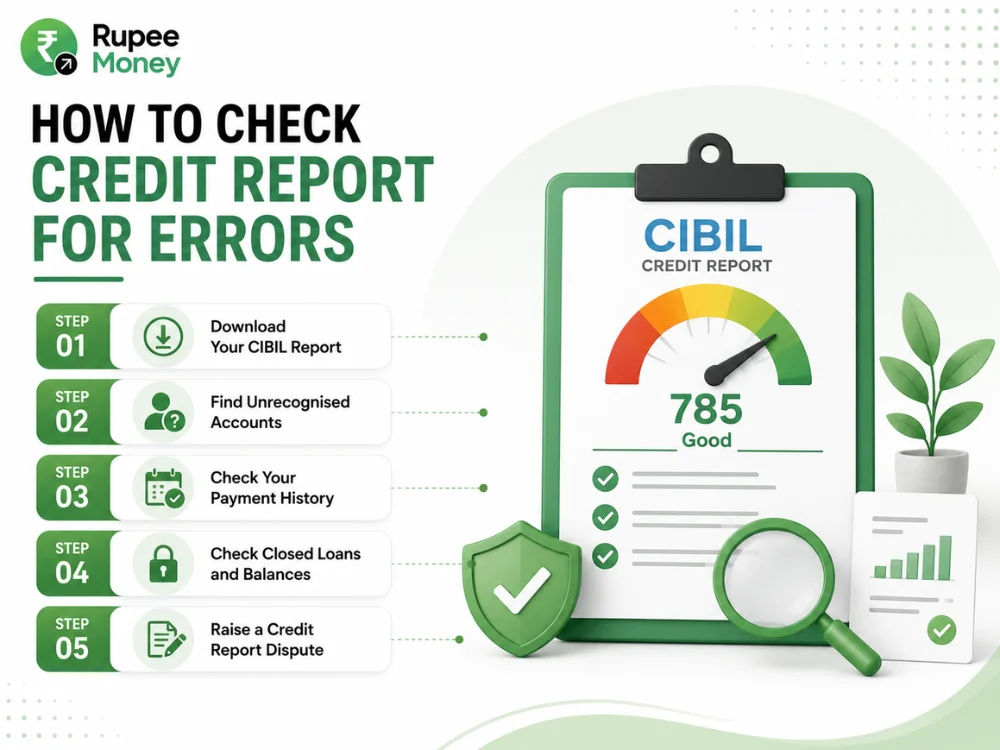
How to Check Credit Report for Errors
You must read every page of the report manually. Look at the “Days Past Due” section specifically. Check the total sanctioned amount for every active loan. Ensure the report spells your name and address correctly. Verify your PAN card number and date of birth. Any mismatch can mix your report with another person.
Identify every single lender listed in the document. Match the account numbers with your actual bank statements. Highlight any suspicious entry with a marker. You need this highlighted information for your formal dispute.
Step 1: Download Your CIBIL Report
You must download your credit report first. Do not wait for a loan rejection. Regular checks help you spot mistakes early. CIBIL provides one free credit report every calendar year.
Visit the official CIBIL website to get your report. Create an account using your PAN card and email. Download the detailed PDF document for your personal records. You should review this report very carefully. Compare all entries with your actual bank statements. Do not trust bureau data blindly. Banks make data entry mistakes frequently.
Step 2: Find Unrecognised Accounts
An unfamiliar loan requires your immediate attention. You might spot a credit card you never opened. Sometimes, banks mix up files with similar names. Other times, criminals steal your identity to borrow money.
Never ignore unrecognised accounts on your credit report. Contact the specific lender immediately to report the fraud. You must also raise a dispute with the credit bureau. CIBIL advises consumers to report unfamiliar enquiries quickly. Keep copies of all your emails and complaint letters. These documents support your formal dispute strongly.
Step 3: Check Your Payment History
Your payment history impacts your CIBIL score significantly. You must verify all your EMI and credit card payments. You might pay your credit card bill before the deadline. Choose between UPI or credit card for easy payments.
Your report must show this payment on time. Banks sometimes report timely payments as overdue accidentally. Match every entry against your original payment receipts. Collect your bank statements before raising any dispute. Wrong late payment marks destroy your credit profile. Always fix wrong payment history in CIBIL immediately. Use our EMI Calculator to plan your future payments.
Step 4: Check Closed Loans and Balances
A fully repaid loan must show a closed status. If your report shows it as active, investigate quickly. Always collect a No Objection Certificate after loan closure. This document proves your complete loan repayment legally.
Verify the outstanding balance on every single loan account. A settled loan must show a zero balance. Duplicate accounts also create massive credit score problems. A single debt might appear twice by mistake. This duplication reduces your available credit limit unfairly. CIBIL allows you to dispute duplicate accounts easily.
Step 5: Raise a Credit Report Dispute
You must raise a formal dispute to fix errors. The credit bureau will not fix mistakes automatically. Submit your relevant information and all supporting documents. Keep your final loan closure letter ready. Provide payment receipts to prove your timely EMIs.
CIBIL offers a simple online dispute resolution process. You can dispute wrong personal details or incorrect account data. The bureau contacts the respective bank immediately. CIBIL cannot change lender data independently. The bank must confirm the error before CIBIL updates it.
What to Do If Credit Report Has Errors
Never panic when you see a reporting mistake. Gather your financial evidence quickly. Call your bank’s customer service department for immediate help. Send an official email to the bank’s grievance officer.
Raise the bureau dispute simultaneously to save valuable time. Follow up with the bank every single week. Escalate the issue to the Banking Ombudsman if necessary. Persistent follow-ups force the bank to correct the error.
How Long Does a CIBIL Dispute Take?
Credit report correction takes some time. CIBIL resolves most disputes within thirty days. The timeline depends on the bank’s response speed. The bureau updates your report after the bank confirms.
If the bank rejects your dispute, contact their grievance officer. Track your dispute status online regularly. Do not assume the bureau fixed the problem instantly. CIBIL marks the entry “Under Dispute” during this verification process.
Can You Remove Negative Information?
You cannot erase accurate negative information from your report. A credit bureau records factual data from your lenders. If you missed payments, the bureau records those facts. You cannot demand deletion just to increase your score.
The dispute process only fixes inaccurate or incorrect information. You can challenge a timely payment reported as late. You can also challenge an account belonging to someone else. CIBIL needs clear bank confirmation before modifying any record.
How to Improve Your Credit Score After Correction
Fixing errors only completes half the job. You must maintain excellent financial habits constantly. Read our full guide to improve your CIBIL score.
First, pay all your EMIs on time always. Set up automatic bank mandates for your loan payments. Timely repayments build a very strong credit history.
Second, keep your credit utilisation ratio strictly under control. Avoid maxing out your credit card limits every month. High utilisation signals financial distress to future lenders.
Third, stop applying for multiple loans simultaneously. Every new application creates a hard credit enquiry. Too many enquiries lower your credit score quickly.
Never close your oldest credit card account. A long credit history improves your score significantly. Maintain a healthy mix of secured and unsecured loans. Do not borrow money just to create a credit mix. Take new loans only during genuine financial emergencies.
Monitor your joint loans very closely. Your co-borrower’s missed payment hurts your personal score.
RBI Rules Make Credit Updates Faster in 2026
Credit reporting in India changed significantly recently. The RBI introduced a new fortnightly reporting framework. Banks now report data on the fifteenth and thirtieth. They submit this information within seven calendar days.
This fast system helps all Indian borrowers in 2026. Your loan repayment updates reach the credit bureau much faster. The RBI also enforces strict consumer protection rules. Banks must pay compensation for delayed credit report corrections. You receive one hundred rupees per day for delays. This penalty applies if resolution takes over thirty days. Always keep your dispute reference numbers safe.
Credit Score Reset vs Credit Score Improvement
People confuse credit score resets with credit score improvement. A reset focuses purely on correcting reporting errors. You dispute wrong information and fix duplicate entries.
Credit improvement focuses on your actual financial behaviour. You build a strong repayment history over several years. You control your credit utilisation and limit new enquiries. A simple dispute cannot fix genuine missed payments. You must adopt healthy borrowing habits for long-term success. Calculate your future borrowing capacity with our Home Loan Calculator.
Credit Score Reset Checklist for Indian Borrowers
Review your credit profile before applying for any loan. Follow this simple checklist:
- Verify your name and PAN details.
- Check all active loan accounts.
- Look for unknown credit cards.
- Review your exact payment history.
- Verify current outstanding loan balances.
- Identify duplicate loan accounts clearly.
- Review all recent credit enquiries.
- Raise disputes for genuine reporting errors.
- Track the ongoing dispute status.
- Keep paying your current EMIs.
This quick review prevents unexpected loan rejections later.
Conclusion
A credit score reset does not erase your history. It ensures your report reflects your actual financial behaviour. Start by checking your credit report regularly. Identify unfamiliar accounts, wrong payment records, and outdated balances.
Raise a dispute with the bureau and the lender immediately. Track the correction actively and review your updated report. Maintain excellent repayment habits to build a strong profile. The RBI fortnightly reporting framework provides faster updates now. A successful reset combines accurate reporting with responsible borrowing.
FAQs
What does credit score reset mean?
A credit score reset means correcting your credit profile. It does not delete your entire credit history. You dispute incorrect loan accounts and wrong payment records. The credit bureau coordinates with the concerned lender. The bureau updates the information after the lender confirms. You cannot remove accurate negative information from your report.
How can I reset my CIBIL score?
You cannot manually reset your score to a new number. Instead, you check your report for genuine errors. You dispute incorrect information through the official CIBIL website. Look for unfamiliar accounts and outdated loan balances. Focus on timely EMI payments to improve your score. Consistent credit behaviour supports your profile over time.
How do I fix an incorrect loan?
First, identify the specific lender associated with the loan. Check the account details carefully. Contact the lender and raise a dispute immediately. Provide your closure documents if you repaid the loan already. The credit bureau cannot change lender data independently. The lender must confirm the correction first.
How long does CIBIL take to correct errors?
CIBIL resolves most disputes within thirty days. The actual time depends on the bank's response speed. Track your dispute status online regularly. The bureau updates the information after the bank confirms. Contact the lender directly if they reject your dispute.
Can I remove a genuine late payment?
You cannot remove an accurate late payment record. You must maintain timely repayments going forward. However, you can dispute incorrectly reported late payments. Keep your bank statement as supporting evidence. The lender must confirm your timely payment first. The bureau updates the record after receiving this confirmation.
Does checking my own CIBIL score reduce it?
Checking your own credit report does not reduce it. CIBIL provides consumer access for profile monitoring. This is called a soft credit enquiry. A soft enquiry never hurts your credit score. However, a lender's check creates a hard enquiry. Hard enquiries lower your score temporarily.
How often should I check my credit report?
You do not need to check your score daily. However, regular monitoring helps you identify errors early. Check your report before applying for a major loan. Check it again after closing a major loan. This practice reveals reporting problems before they cause rejections.
Can paying off a loan improve my score?
Paying off a loan improves your overall financial position. It does not guarantee an immediate score increase. Make sure the lender reports the correct account status. Raise a dispute if the account shows an incorrect balance. The RBI fortnightly reporting framework supports faster updates today.
CIBIL resolves most disputes within thirty days. The actual time depends on the bank’s response speed. Track your dispute status online regularly. The bureau updates the information after the bank confirms. Contact the lender directly if they reject your dispute.
Checking your own credit report does not reduce it. CIBIL provides consumer access for profile monitoring. This is called a soft credit enquiry. A soft enquiry never hurts your credit score. However, a lender’s check creates a hard enquiry. Hard enquiries lower your score temporarily.
Disclaimer: This article provides general information for educational purposes only. It does not constitute financial, legal, or tax advice. Credit scores vary between bureaus and financial institutions. RBI rules and bureau policies may change over time. Verify your latest credit report before making financial decisions. Consult the concerned lender for specific account issues. RupeeMoney does not guarantee any specific credit score improvement.
ABOUT THE AUTHOR

