
Abdul Kalam Technology Innovation National Fellowship: A Complete Guide

India’s journey toward becoming a global innovation hub depends not just on groundbreaking research, but on actually turning that research into practical technologies that solve real-world problems. This was a vision Dr. A. P. J. Abdul Kalam championed throughout his career, grounded in the belief that scientific research should directly feed into national development and industrial progress.
To honour that vision, the Department of Science and Technology (DST), through the Science and Engineering Research Board (SERB), launched the Abdul Kalam Technology Innovation National Fellowship in 2017, in association with the Indian National Academy of Engineering (INAE). The fellowship recognises outstanding engineers making genuine contributions to translational research, engineering innovation, and technology development in India.
At RupeeMoney, we believe government-backed fellowship and grant schemes play a real role in strengthening India’s research ecosystem — encouraging the kind of innovation that eventually benefits industries, society, and the broader economy. The Abdul Kalam Technology Innovation National Fellowship doesn’t just recognise exceptional engineering professionals; it backs them with a substantial research grant to keep developing technologies with real-world impact.
This guide covers the fellowship’s objectives, eligibility, benefits, research grant amount, selection process, and nomination procedure — along with why it’s considered one of India’s more prestigious recognitions for engineering professionals.
What Is the Abdul Kalam Technology Innovation National Fellowship?
The Abdul Kalam Technology Innovation National Fellowship is a national-level fellowship established in 2017 to recognise outstanding engineers who’ve made significant contributions to engineering innovation, translational research, and technology development in India.
The fellowship is coordinated and awarded by the Indian National Academy of Engineering (INAE), New Delhi, and is administered and funded through the Science and Engineering Research Board (SERB) under the Department of Science and Technology (DST).
Unlike academic fellowships built around purely theoretical research, this one specifically rewards engineers whose work has practical applications — research that contributes to industrial development, real technological advancement, and national priorities rather than staying confined to journals.
Objectives of the Abdul Kalam Technology Innovation National Fellowship
The fellowship exists to encourage innovation-driven engineering research that creates measurable benefit for both society and industry. Its core objectives include recognising outstanding engineers working in translational research, promoting technology-driven innovation across engineering disciplines, and encouraging practical engineering solutions with real commercial and societal value. It also aims to support researchers building technologies that genuinely benefit India, strengthen collaboration between academia, research institutions, and industry, and honour Dr. Kalam’s vision by promoting innovation-led development — while inspiring the next generation of engineers to pursue work with tangible impact.
The fellowship reflects a broader national goal: building an innovation-driven economy genuinely supported by research and technology, not just theoretical output.
Who Can Apply for the Abdul Kalam Technology Innovation National Fellowship?
This is where precision really matters, since the eligibility criteria are quite specific. Candidates must be Indian nationals — and, notably, Overseas Citizens of India (OCIs) working in permanent positions at public-funded institutions in India are also eligible — currently employed in a permanent position in the engineering profession at a public-funded institution.
Applicants need at minimum a bachelor’s degree in an engineering discipline, along with a genuinely outstanding record of translational research or technology development with demonstrated practical or societal impact. One firm eligibility rule: candidates must have at least five years of service remaining in their parent organisation as of the award date — this rules out candidates close to retirement, regardless of their research record. Applicants also cannot hold another active fellowship simultaneously; if selected while already holding one, they must choose between them.
Key Benefits of the Abdul Kalam Technology Innovation National Fellowship
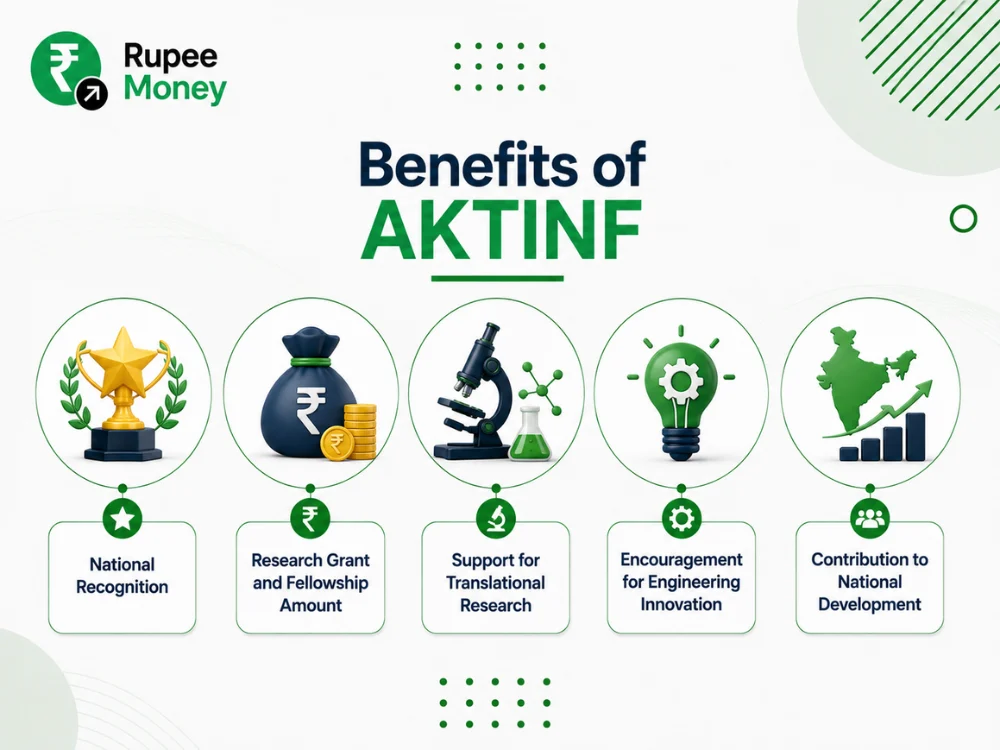
The fellowship offers both prestigious national recognition and significant financial support, with clearly defined benefits instead of unclear or unspecified assistance.
National Recognition
Receiving this fellowship is a genuinely prestigious achievement, publicly acknowledging exceptional contributions to engineering research and innovation at the national level. Only a maximum of 10 fellowships are awarded per year, which keeps the recognition meaningfully selective.
Research Grant and Fellowship Amount
Selected fellows receive a monthly fellowship of ₹25,000, paid in addition to their regular salary, along with a research grant of ₹15 lakh per annum to fund ongoing research and technology development. The host institute also receives an overhead of ₹1 lakh per annum to support the fellow’s work administratively. Worth noting: the fellowship amount itself is taxable under standard Income Tax rules, so fellows should factor that into their planning rather than treating the full ₹25,000 as take-home.
The fellowship runs for an initial term of three years, extendable by up to two additional years based on performance, for a maximum total of five years — genuinely substantial, sustained support rather than a one-time award.
Support for Translational Research
A central objective of the fellowship is encouraging translational research — the process of turning scientific discoveries into practical technologies, industrial applications, and commercially viable solutions, rather than research that stays confined to a lab or a paper.
Encouragement for Engineering Innovation
The fellowship motivates engineers to pursue innovative solutions across healthcare, manufacturing, infrastructure, agriculture, energy, defence, and numerous other sectors where practical engineering genuinely moves the needle.
Contribution to National Development
By recognising engineers working on high-impact technologies, the fellowship feeds directly into India’s longer-term scientific, industrial, and economic development goals.
Role of DST, INAE and SERB
The fellowship runs through a genuine three-way collaboration, with each organisation playing a distinct role.
The Department of Science and Technology (DST)
Under the Government of India, is one of the country’s primary agencies responsible for promoting scientific research, technological innovation and capacity building. It formulates policies and supports programmes that encourage research across universities, national laboratories, industries and research institutions. Through various funding schemes, fellowships and innovation initiatives, DST helps create an environment where scientists and engineers can develop technologies that address national priorities. By supporting the Abdul Kalam Technology Innovation National Fellowship, DST reinforces its commitment to encouraging engineering innovations that can be translated into practical applications, strengthen India’s technological capabilities and contribute to long-term economic development.
The Science and Engineering Research Board (SERB)
It plays an important role in strengthening scientific and engineering research by supporting high-quality research projects, innovation programmes and technology-driven initiatives across the country. Established to promote competitive research funding, SERB encourages scientists and engineers to undertake impactful research that advances knowledge and contributes to national development. Through its support for the Abdul Kalam Technology Innovation National Fellowship, SERB helps foster an ecosystem where engineering professionals can continue pursuing cutting-edge research, develop innovative technologies and translate scientific discoveries into solutions that benefit industries, society and the economy.
The Indian National Academy of Engineering (INAE)
It serves as the implementing and administrative body for the fellowship. It is responsible for inviting nominations, coordinating the application process, scrutinising submissions and facilitating the evaluation of eligible candidates. INAE works with distinguished experts and committees to ensure that the selection process is transparent, merit-based and focused on recognising engineers who have made exceptional contributions to technology innovation and translational research. Beyond administering the fellowship, INAE also promotes excellence in engineering education, research, industry collaboration and technological advancement, making it an important institution in India’s engineering ecosystem.
Together, these three institutions identify and support engineering leaders whose work genuinely moves technological advancement forward, rather than just funding research for its own sake.
Why Translational Research Matters for Engineering Innovation
Research becomes genuinely valuable when it moves beyond the laboratory and creates practical, deployable solutions. Translational research is exactly this — converting scientific discoveries into technologies that improve industries, public services, and everyday life.
Real examples include medical devices developed from laboratory research, advanced manufacturing technologies, clean energy solutions, agricultural innovations, AI applications for public services, and sustainable engineering technologies more broadly. By specifically rewarding translational research, the fellowship pushes innovation toward measurable economic and social impact rather than purely academic output — the kind of impact-driven innovation that also underpins economic development, much like the important role small businesses play in strengthening India’s economy
Selection Process for the Abdul Kalam Technology Innovation National Fellowship
The fellowship follows a structured, nomination-based selection process — this is important to understand upfront, since it isn’t a simple open application. The application process usually includes nomination through the designated channel, often by the applicant’s institution, followed by eligibility verification, assessment of engineering achievements and innovation impact, and a detailed review of their translational research contributions, recommendations from an evaluation committee, and final approval by a specially constituted Search-cum-Selection Expert Committee.
Selection is genuinely competitive, given only 10 fellowships are awarded annually against a national pool of eligible engineers.
How to Apply for the Abdul Kalam Technology Innovation National Fellowship
Because this is a nomination-based fellowship rather than a fully open application, eligible candidates should work through their institution’s official nomination channel rather than applying independently in isolation.
The general process involves visiting the official INAE website (inae.in) or checking the latest call for nominations published through DST/SERB, reviewing the current fellowship notification carefully for that cycle’s specific requirements, completing the nomination form with the required institutional backing, and submitting supporting documents detailing the candidate’s engineering achievements and innovation contributions. Applicants typically also need to upload research publications and technical contributions as required, and submit everything before the notified deadline for that year’s cycle.
Given eligibility requirements, nomination windows, and documentation needs can shift from cycle to cycle, applicants should always check the current official notification rather than relying on details from a previous year.
Why the Abdul Kalam Technology Innovation National Fellowship Matters for India
Innovation has become one of the genuine drivers of India’s economic growth, and schemes like this fellowship help in several concrete ways: promoting indigenous technology development, encouraging genuinely industry-oriented research, strengthening India’s broader innovation ecosystem, and inspiring younger engineers to pursue impact-driven work. It also increases collaboration between research institutions and industry, and supports the wider push toward technology-led self-reliance — the same spirit that underpins schemes like the Green Business Scheme 2026 for sustainable enterprise.
Recognising engineering excellence at this level also tends to encourage greater investment in research and innovation more broadly across the country, beyond just the fellows themselves.
Latest Updates on the Abdul Kalam Technology Innovation National Fellowship
India continues investing in its research and innovation ecosystem through schemes that reward engineering excellence and technology-led development. The Abdul Kalam Technology Innovation National Fellowship remains an active, ongoing recognition programme, with nomination cycles announced periodically by INAE and DST/SERB. Interested applicants and their host institutions should regularly check the official INAE website and the SERB portal for the latest nomination calls, since eligibility criteria, fellowship tenure details, and research grant guidelines can be revised between cycles. If you’re separately exploring other government-backed financial support — for research funding needs, temporary savings, or long-term planning — it’s worth checking Government Securities in India as one low-risk option, alongside standard tools like the EMI Calculator or FD Calculator for planning around research funding timelines.
Key Takeaways
- The Abdul Kalam Technology Innovation National Fellowship recognises outstanding engineering professionals in India, with a maximum of 10 fellowships awarded per year.
- It’s coordinated by INAE, and administered and funded through SERB under DST.
- Selected fellows receive ₹25,000/month (taxable) plus a ₹15 lakh annual research grant, for an initial 3-year term extendable to a maximum of 5 years.
- Eligibility requires Indian nationality (or OCI status for those in permanent India-based roles), a bachelor’s degree in engineering, and at least 5 years of remaining service in the parent organisation.
- This is a nomination-based process, not a direct open application — candidates typically need institutional backing to be nominated.
- It honours Dr. A. P. J. Abdul Kalam’s vision of technology-driven national development.
Frequently Asked Questions (FAQs)
What is the Abdul Kalam Technology Innovation National Fellowship?
A national fellowship, launched in 2017, that recognises distinguished engineers for exceptional contributions to engineering innovation, translational research, and technology development. It’s coordinated by INAE and administered through SERB under DST, honouring Dr. A. P. J. Abdul Kalam’s vision of technology-led national development.
Who is eligible to apply for the Abdul Kalam Technology Innovation National Fellowship?
Indian nationals (and eligible OCIs) working in a permanent engineering position at a public-funded institution, holding at least a bachelor’s degree, with a minimum of 5 years of service remaining in their parent organisation, and not currently holding another active fellowship.
What are the benefits of the Abdul Kalam Technology Innovation National Fellowship?
A monthly fellowship of ₹25,000 (in addition to regular salary, and taxable), a research grant of ₹15 lakh per annum, and a ₹1 lakh annual overhead paid to the host institute, for an initial three-year term extendable up to five years total.
What is translational research and why does it matter here?
Translational research converts scientific discoveries into practical technologies, products, and solutions addressing real-world challenges — bridging the gap between lab research and actual commercial or societal application. It’s the central criterion this fellowship specifically rewards.
How can candidates apply for the Abdul Kalam Technology Innovation National Fellowship?
Through a nomination-based process, typically routed through the candidate’s institution, following the current call for nominations published on INAE’s website. Candidates should review that cycle’s specific eligibility criteria, documentation requirements, and deadlines carefully, since these can change between cycles.
Conclusion
The Abdul Kalam Technology Innovation National Fellowship is more than a prestigious title — it’s a genuine, well-funded recognition of engineering excellence that pushes researchers to turn innovative ideas into technologies that actually improve lives and strengthen India’s economy. By specifically rewarding translational research and engineering innovation, the fellowship carries forward Dr. A. P. J. Abdul Kalam’s belief that science and technology should directly serve national development.
For engineers and researchers genuinely committed to practical technological solutions, this fellowship offers both national recognition and real, sustained financial support — ₹25,000 monthly plus a ₹15 lakh annual research grant for up to five years — to keep that work moving forward. As India continues investing in innovation-led growth, programmes like this remain genuinely important for nurturing the next generation of engineering leaders. And as with any long-term financial commitment tied to a fellowship or research career, it’s worth thinking about the bigger financial picture too — Building Wealth in Your 20s is a useful place to start if you’re early in that journey, and staying alert to scams matters here too, since AI-powered financial fraud is rising across channels that sometimes impersonate legitimate government schemes.
Disclaimer: This article is intended for informational and educational purposes only. Information regarding the Abdul Kalam Technology Innovation National Fellowship, including eligibility, research grant amounts, nomination process, fellowship tenure, and application guidelines, may be revised by the Department of Science and Technology (DST), the Indian National Academy of Engineering (INAE), or the Science and Engineering Research Board (SERB). Applicants and nominating institutions should always verify the latest official notification on the INAE or SERB website before submitting a nomination.
ABOUT THE AUTHOR

