
What You Need to Know About GST on Sale of Used Car in 2026
The rules surrounding GST on sale of used car transactions confuse many buyers and sellers today. The government introduced new GST rate changes in January 2025. This created a massive misconception in the auto market. Many people believe that an 18% GST rate means they must pay 18% tax on the entire price of a second-hand car. Welcome to RupeeMoney, your trusted financial platform. In this guide, we will clear up the confusion and explain exactly how vehicle taxation works.
This assumption about paying 18% on the total value is completely wrong for eligible transactions. Registered businesses use a specific margin scheme when dealing in used vehicles. From January 16, 2025, the GST Council increased the tax rate for old and used vehicles from 12% to 18%. However, they clarified that this tax applies strictly to the supplier’s margin, not the full value of the car. Furthermore, this rule does not apply to unregistered individuals selling their personal cars.
You must understand what GST on used car sales actually means, who has to pay it, and how the calculation works.
What Is GST on Used Cars?
GST on Used Cars refers to the Goods and Services Tax applied when a registered business supplies a second-hand vehicle.
The most important detail is the margin scheme. The government does not simply apply the GST percentage to the entire selling price. Instead, the taxable value equals the difference between the selling price and the original purchase price. If a business claims depreciation on the vehicle, it uses the depreciated value to determine the margin.
What Changed for GST on Used Cars in 2025?
Before January 2025, specific old and used vehicles attracted a 12% GST rate. The government increased this rate to 18% on January 16, 2025. This rate hike also included used electric vehicles (EVs) that previously enjoyed the lower tax bracket. Vehicles that already sat in the 18% bracket saw no changes.
The critical takeaway is simple. An 18% GST rate does not mean you pay 18% of the entire vehicle price.
Who Has to Pay GST on Sale of Used Car?
The tax liability depends entirely on who sells the vehicle. It also depends on whether the transaction qualifies as a business activity.
Does GST Apply When You Sell Your Personal Car?
No, GST does not apply when an individual sells a personal car. If you buy a car for personal family use and later sell it to a neighbor, you do not charge GST.
The government does not consider this a business supply just because money changes hands. The GST Council explicitly stated that the margin-based tax changes do not apply to unregistered persons making private sales.
What Happens When a Dealer Sells a Used Car?
A GST-registered dealer must pay GST. If a business buys and sells used cars to make a profit, it falls under the margin scheme.
This rule covers organized used-car dealerships and corporate resellers. These registered second-hand vehicle dealers must pay GST on the exact difference between their purchase price and their selling price.
How Is Used Car GST Calculation Done?
Understanding the used car GST calculation requires basic arithmetic. Let us look at a practical example to see how the margin concept works.
Imagine a registered used-car dealer executes a trade:
- The dealer buys a car for ₹8,00,000.
- The dealer sells the car for ₹9,00,000.
- The dealer claims no input tax credit on the purchase.
The margin equals:
₹9,00,000 (Selling Price) − ₹8,00,000 (Purchase Price) = ₹1,00,000.
The dealer calculates the 18% GST exclusively on this margin.
₹1,00,000 × 18% = ₹18,000.
The dealer pays ₹18,000 in GST. They do not calculate 18% on the massive ₹9,00,000 selling price.
What If the Dealer Claimed Depreciation?
Sometimes, a business sells a company car that it previously used as a business asset. If the business claimed depreciation on this vehicle, the used car GST calculation changes slightly.
The business must use the vehicle’s written-down value (depreciated value) to find the margin.
- Selling price = ₹7,00,000.
- Depreciated value = ₹5,50,000.
The new margin becomes:
₹7,00,000 − ₹5,50,000 = ₹1,50,000.
The business applies the 18% GST rate to the ₹1,50,000 margin, resulting in a ₹27,000 tax liability.
What Happens If the Car Sells at a Loss?
Dealerships sometimes sell cars at a loss to clear inventory. Suppose a dealer buys a vehicle for ₹12,00,000 but struggles to sell it. They eventually sell it for ₹10,00,000.
This creates a negative margin of −₹2,00,000. The margin scheme completely ignores negative numbers. The dealer does not calculate GST on a loss. They also do not receive a GST refund from the government for this negative margin. The tax liability simply becomes zero.
Why Is GST Charged on the Margin and Not the Full Price?
The government designed the margin scheme specifically to prevent double taxation on second-hand goods.
When a dealer buys a used car, the original owner already paid the full GST when they bought the car brand new. Taxing the entire selling price a second time would unfairly tax the same asset twice. The margin mechanism prevents this. It strictly taxes the “value addition” created by the dealer.
If the dealer adds ₹1,00,000 of value before reselling the car, the government only taxes that specific ₹1,00,000.
What Does GST on Used Cars Mean for Buyers?
When you buy a used car from a registered dealership, the dealer usually includes the GST in the final transaction price.
Buyers often panic when they hear about the 18% rate. They wo
rry it will inflate their budget drastically. However, because the tax applies only to the dealer’s profit margin, the actual tax burden remains quite small.
If you ask the dealer for a detailed invoice, you will see the exact taxable value. The invoice will separate the base cost of the car from the GST charged on the dealer’s margin.
How Does Input Tax Credit Affect GST on Used Car?
Input Tax Credit (ITC) plays a massive role in vehicle taxation for businesses. A dealer can only use the special margin scheme if they have not claimed any Input Tax Credit on the purchase of the vehicle.
If a business claims ITC on a vehicle, they forfeit their right to use the margin scheme. They must follow different, standard GST rules when they eventually sell that asset. Businesses must meticulously review their accounting ledgers and ITC history before calculating their final tax liability.
Where Does the GST Margin Scheme Apply?
The margin scheme applies to eligible businesses dealing exclusively in second-hand goods. It perfectly suits commercial dealerships that purchase vehicles, recondition them, and resell them for a profit.
However, not every single transaction qualifies automatically. The seller’s GST registration status, the specific purchase conditions, and the ITC history dictate eligibility. If you operate a business, always consult a tax professional to confirm you meet the strict criteria outlined in Rule 32(5) of the CGST Rules.
Balancing Finances: Car Loans vs Home Loan Repayment
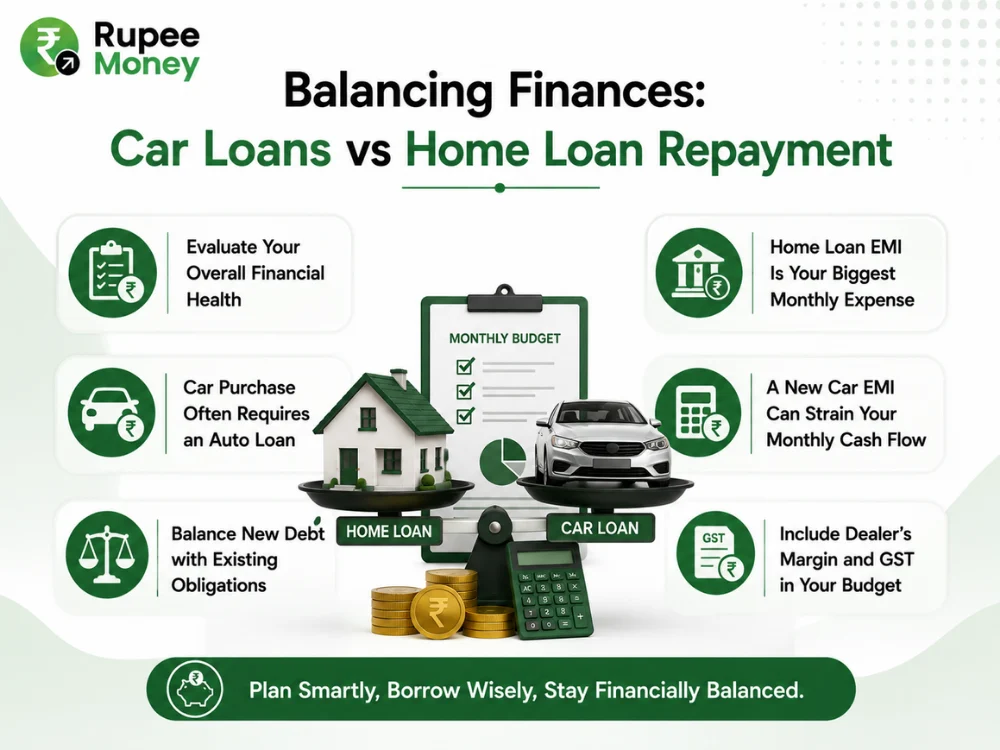
When you plan to buy a car, you must evaluate your overall financial health. A car purchase often requires taking an auto loan. You must balance this new debt against your existing obligations, especially your home loan repayment.
Your home loan EMI usually represents your largest monthly expense. Taking on a new car EMI could strain your monthly cash flow. You must carefully assess how the new vehicle cost—including the dealer’s margin and GST fits into your budget.
Why Should You Monitor Your Home Loan Interest?
Before buying a car, check your current home loan interest rate. If inflation rises, the RBI might hike interest rates. (Learn more about what is inflation and why does it matter. A rate hike will increase your home loan tenure or push your EMI higher.
You should use a home loan repayment calculator to project your future payments. If your home loan costs are rising, you might want to delay your car purchase or buy a cheaper, second-hand vehicle to keep your total debt manageable.
You can easily evaluate your debt capacity using RupeeMoney’s EMI Calculator. Never take an auto loan without ensuring your primary home loan remains completely secure. Compare your borrowing options by reading our guide on personal loan vs home loan.
What Are the Common Misconceptions About GST on Used Cars?
The used car market suffers from several persistent myths regarding taxation.
| Misconception | The Reality |
| Every sale attracts 18% GST. | Private sales between unregistered individuals attract zero GST. |
| GST applies to the full price. | Eligible dealers calculate GST exclusively on their profit margin. |
| Dealers pay GST on losses. | The margin scheme ignores negative margins. The tax liability becomes zero. |
| The 2025 rules created a new tax. | The margin scheme already existed. The government simply hiked the rate from 12% to 18% for specific categories. |
Conclusion
Understanding GST on sale of used car transactions empowers both buyers and sellers. You must look far beyond the intimidating 18% headline rate.
The January 2025 rate hike did increase the tax burden on dealers, but the margin mechanism protects consumers from paying tax on the entire vehicle value. If a dealer buys a car for ₹8,00,000 and sells it for ₹9,00,000, the 18% tax applies solely to the ₹1,00,000 profit margin.
For private individuals, the process remains entirely tax-free. You can buy and sell personal vehicles without worrying about GST compliance.
The ultimate takeaway is clear. GST on used car sales focuses heavily on the value added by commercial dealerships. As a buyer, you should always review your invoice carefully to ensure the dealer calculated the tax correctly. Keep your overall finances balanced, monitor your other debts like your home loan repayment, and make smart, informed purchasing decisions.
FAQs
What is GST on sale of used car?
It is the specific tax applied to eligible transactions involving second-hand vehicles. For registered dealers, the government calculates this tax strictly on the profit margin rather than the full selling price.
When did the GST on Used Cars change?
The GST Council officially increased the tax rate for specific old and used vehicles from 12% to 18% on January 16, 2025.
How do I perform a used car GST calculation?
Subtract the purchase price from the selling price to find the margin. Then, multiply that exact margin by the 18% GST rate.
Does GST apply when I sell my personal car?
No. An unregistered individual selling a private vehicle does not charge GST. The government does not classify private sales as taxable business supplies.
Do used-car dealers pay GST if they make a loss?
No. If a dealer sells a car below their original purchase price, they generate a negative margin. The margin scheme ignores negative amounts, meaning the dealer pays zero GST on that specific sale.
Can a dealer claim input tax credit under the margin scheme?
No. To qualify for the special margin scheme under Rule 32(5), the business must explicitly confirm they did not avail any Input Tax Credit when they purchased the second-hand vehicle.
Disclaimer: The information provided on RupeeMoney is for educational and informational purposes only and does not constitute financial, investment, tax, or legal advice. GST rules, tax rates, and home loan interest rates are subject to change by regulatory authorities. Always conduct your own research or consult a qualified tax professional and a SEBI-registered financial advisor before making any financial or tax-related decisions.
ABOUT THE AUTHOR

